

"Multigenerational living has made a comeback in recent years. Is it right for you?"
During the pandemic, many of us reexamined the meaning of home for ourselves and our loved ones. Today, that can be seen in the recent rise in multigenerational households. According to Jessica Lautz, Deputy Chief Economist and Vice President of Economic Research at the National Association of Realtors (NAR):
“Multi-generational buying may be a home where families live in the same home with elderly parents, children who have boomeranged back home, or other extended family members. While this is not a new concept of living, it is one which has gained recent popularity.”
And citing data from Pew Research Center, the Wall Street Journal (WSJ) says:
“. . . multigenerational living has made a comeback in recent years, particularly after the 2008 financial crisis and during the pandemic.”
So, if buying a multigenerational home has crossed your mind, you aren’t alone. Depending on what stage of homeownership you’re in, there are different reasons it could be the right fit. The chart below shows responses to a recent survey from NAR about the reasons people have bought a multigenerational home:
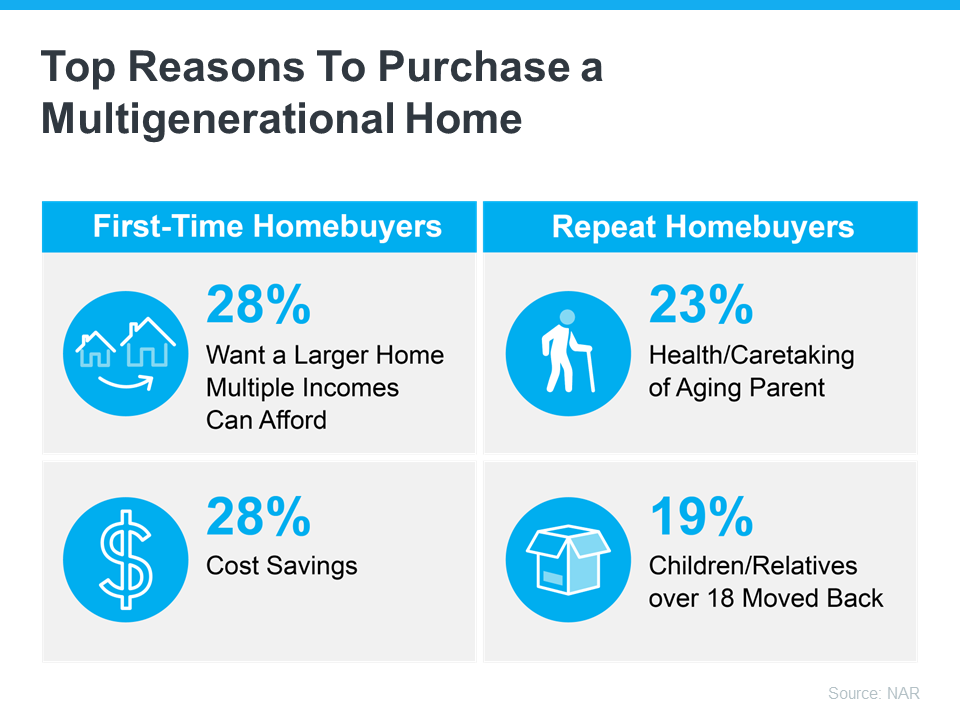
Whether your motives are financial or focused on the people you’ll share your home with, a multigenerational home has distinct advantages. It can make homeownership more affordable, and it can help you best support your loved ones. As Lautz explains:
“Multi-generational home buying is a way for families to care for one another, support one another, and often buy a home that may have been previously out of reach. . . . The trend of multigenerational buying appears to be firmly established and one that could expand in the future.”
Bottom Line
If you’re ready to buy a house, consider the opportunities of a multigenerational home. Let’s connect so you can explore your options in our area.
To view original article, visit Keeping Current Matters.
The Home Insurance Move That Could Save You $440 a Year
Shop around and get multiple quotes before you pick your insurance provider. Then, once you’re settled in, review your policy each year when it comes up for renewal.
Don’t Let the Fear of a Buyer Backing Out Scare You Away from Selling
When you read headlines about canceled deals, they don’t give you the full picture. Most home sales still make it to closing.
Why Builders May Be More Motivated To Sell Than Homeowners
A homeowner may be able to wait for the right offer. But a builder with several finished houses sitting unsold may have more reason to get those homes sold sooner rather than later.

Why Most People Are Still Glad They Bought a Home
A home isn’t typically something you buy for just a year or two. It’s a longer-term play. And when you zoom out, it all starts to fall into perspective – especially if you look at home prices and equity.
What Higher Mortgage Rates Mean for Home Sellers
You don’t automatically need to slash your price or offer a big concession. But you do need to price and market your house based on what buyers can pay today – not what sellers could get a few years ago.

The Mortgage Rate You See Online Isn’t Necessarily the One You’d Get
A simple conversation with a loan officer can help you determine when you’ll be ready to buy, how much you can borrow, and of course, what your real rate will be.