

"Homes are taking longer to sell across the board."
When you see a house that’s been sitting on the market for a while, the reaction is almost automatic. You start thinking:
- What’s wrong with it?
- Why hasn’t anyone bought it yet?
- Am I missing something?
That mindset made sense a few years ago. But in today’s market, you may actually miss out.
More Time on Market Isn't Automatically a Concern Anymore
A few years ago, homes sold in just a matter of days. Sometimes, hours. Anything that lingered longer than that raised concerns. But that’s no longer the baseline.
Inventory has grown. Buyers have more choices. And homes are taking longer to sell across the board. Those are some of the reasons why the typical time it takes a home to sell has climbed this year:
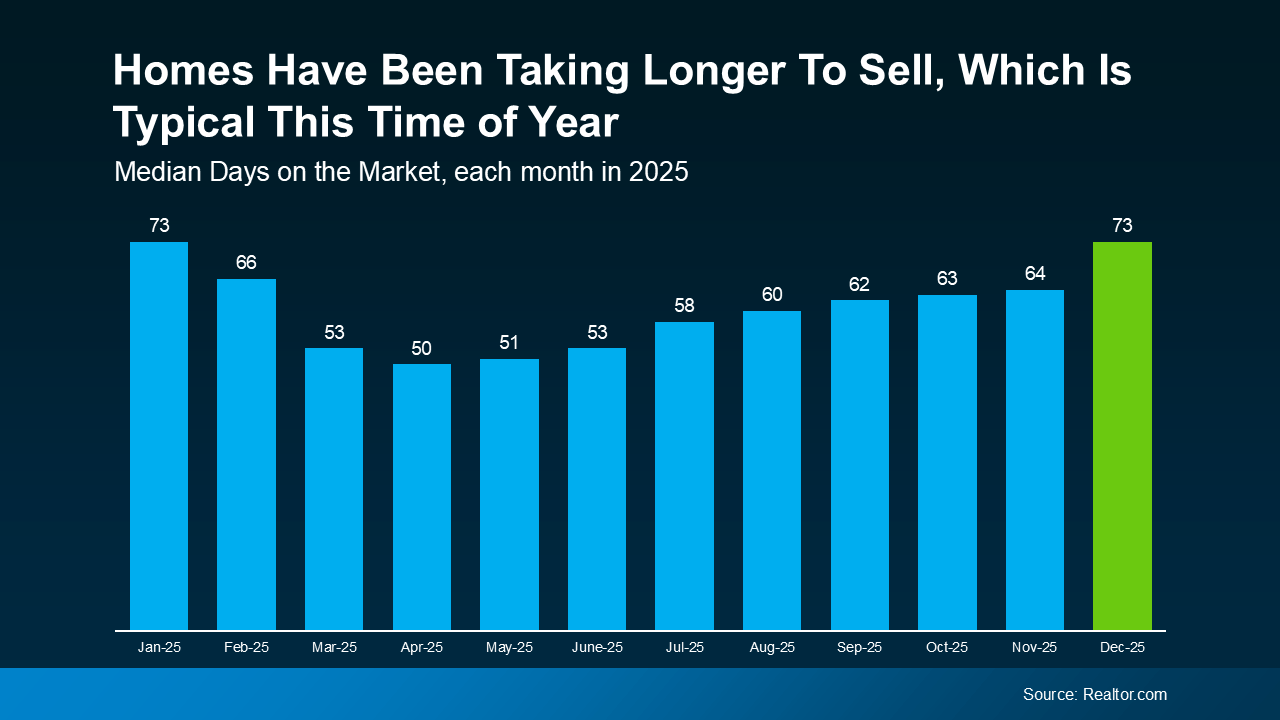 And it’s not that 73 days is slow. That’s actually pretty normal for this time of year. It just feels slow because you heard so much about houses being snapped up in the buying frenzy a few years ago.
That shift alone explains a lot of what you’re seeing. It’s not necessarily that there’s anything wrong with the house itself. Although, let’s be honest, sometimes that is the case.
Most of the time today, a house that’s taking longer to sell simply means:
- There are a lot of homes for sale in that area
- The seller priced a little too high at first
- The home didn’t photograph as well online
- Buyers passed it over for flashier listings nearby
- The timing just wasn’t right when it first hit the market
None of those are necessarily deal-breakers.
What Buyers Often Get Wrong About These Listings
Because even though you may assume a house that hasn’t sold must have hidden issues, the reality is, that’s not always the case. And, if the house does have issues, it'll show up quickly in your inspection.
That’s information you can use to negotiate. Not a reason to walk away automatically. And in many cases, that’s where buyers find the best deals.
The key is knowing which homes that have been sitting for a while are worth a second look – and which ones aren’t. That’s why working with a local agent makes a real difference. They’ll be able to look at disclosures and more to help you uncover hidden gems other buyers may overlook.
Bottom Line
A home sitting on the market isn’t always a warning sign. Sometimes it’s an overlooked opportunity.
If you want help identifying which homes are worth a second look (and which ones to skip), let’s talk.
To view original article, visit Keeping Current Matters.

Most Home Sales Close – Here’s How To Keep Yours on Track
Some reasons are outside a seller’s control, like whether a buyer’s loan clears or whether they sell their own home in time. But there are a few proactive things you can do to help make sure your sale goes as smoothly as possible.

Selling a Luxury House? Here’s Why Now Is a Good Time
High-end buyers tend to feel less of the affordability pressure weighing on many households today, so they keep buying even when the wider market slows.
More Homes, Better Prices: A Buyer’s Summer
Sellers are reading market conditions and are pricing accordingly from the start rather than listing high and cutting later, and buyers are taking note and making bids.

The “Take It or Leave It” Attitude Is Fading from the Market – What That Means for You
That’s why whether you’re buying or selling today, there are two terms you’ll hear a lot: concession and incentive.
What Buying or Selling a Home Gives Back to Your Community
Want to know what a move would mean where you live? A local agent can show you the figure close to home.
The 1 Factor That Explains Everything Happening with Home Prices Right Now
The national average of 1.7% price growth is accurate, but it’s an average of two very different stories happening at the same time – the few areas experiencing mild declines and the overwhelming majority that are still seeing prices rise.